







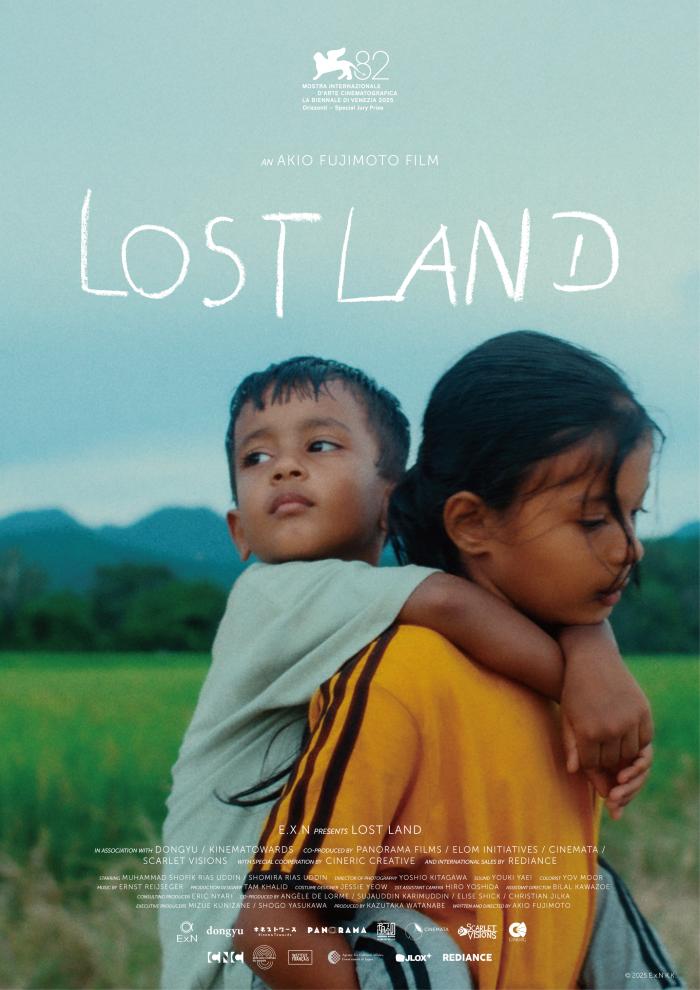
Director: Akio Fujimoto
In this quietly powerful, first-ever Rohingya-language feature, Japanese filmmaker Akio Fujimoto offers a haunting, intimate portrait of two siblings fleeing persecution in Myanmar. With nothing but vague directions and each other, nine-year-old Somira and her younger brother Shafi begin a harrowing journey to join an uncle in Malaysia, crossing borders by sea and land and navigating a world shaped by smugglers, fear and exploitation. With a cast of non-professional actors, most of whom lived refugee experiences, the film blends realism with lyrical restraint. Eschewing melodrama for quiet observation, Fujimoto captures the disorientation of displacement and the uncertainty of fragile hopes. Lost Land is a timely, deeply human reflection on survival, resilience and the Rohingya’s eternal search for a place to call home.

Director: Jonas D'adesky
In Kwibuka, Remember, Jonas D’Adesky tells the story of Lia, a Belgian-Rwandan basketball player facing the twilight of her career. Twenty years after fleeing the genocide, she is asked to join the Rwandan national basketball team. This journey stirs buried memories of a painful past: exile, family silences and the pain of a fractured identity. Through her eyes, the film explores confrontation between memory and the present, and a nation scarred by tragedy with a contemporary Rwanda brimming with life and creativity. The strength of Kwibuka, Remember lies in the delicate handling of generational trauma while highlighting collective hope. Balancing intimacy and history, the film transcends personal drama to deliver a universal story of resilience.

Director: Petra Volpe
Petra Volpe’s salute to caregivers is executed with strength and admiration. Led by a nuanced and meticulous performance from Leonie Benesch, Late Shift is an eloquent plea for compassion, as well as being a gripping story about a day in the life of a hospital worker. Floria (Benesch) is a nurse on an understaffed surgical ward, where she balances the constant demands of her patients — medical and emotional — knowing that every decision she makes (or neglects) could have fatal consequences. Floria, and Volpe’s camera, are constantly on the move to beeping monitors and crash carts in the ward’s confined quarters. As Switzerland’s Oscar submission, Late Shift delivers high drama and a sharp question: who will care for the carers?